Grab my FREE STEM Ecosystem Insights Report here: https://www.aspenholland.com/ecosystem-report
The Real-World STEM in Class is a weekly newsletter that rounds-up timely STEM news and stories for educators, so educators can easily incorporate real-world STEM conversations into the classroom!
Computer Science & Health Technology
"Beyond the headset: How immersive technology is reshaping Veteran care"
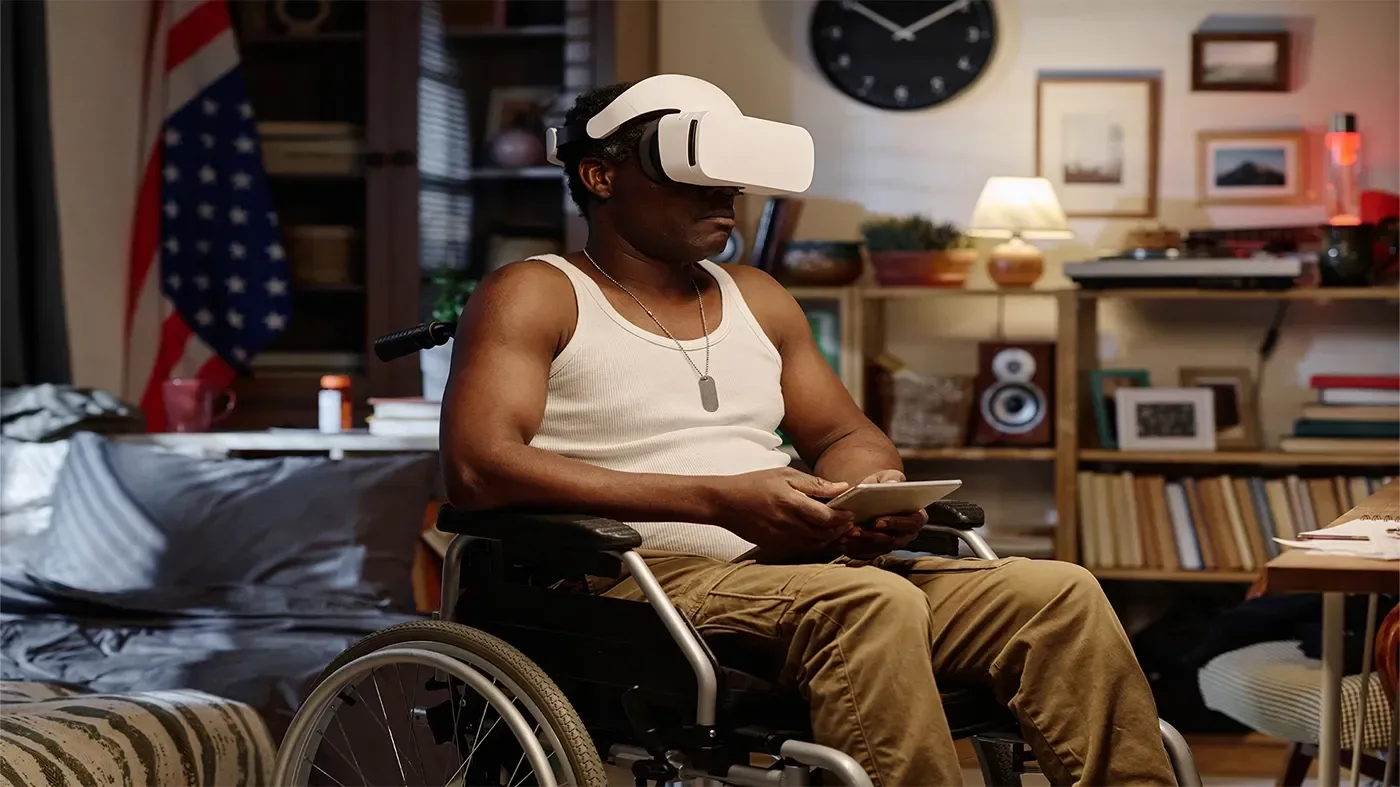
Summary: Veterans at the Washington, D.C., VA Medical Center tried virtual reality, augmented reality, and mixed reality tools at an "Immersive Demo Day," alongside active duty service members, community members, and VA staff. Together these tools are called extended reality, or XR, and the U.S. Department of Veterans Affairs uses them in mental health, pain management, and physical rehabilitation, including care for anxiety, PTSD, addiction recovery, and physical and recreational therapy. Some Veterans used headsets and apps designed to promote relaxation and lower pain, while others chose active programs that sharpened their focus and got them moving. Through its national program, VA Immersive, the department has brought these tools to more than 100 VA medical centers and outpatient clinics and supported almost 8,000 Veteran immersive experiences. Dr. Anne Lord Bailey, executive director of the Veterans Health Administration Strategic Initiatives Lab, told VA News that events like this let her team "gather real-time feedback" from the Veterans who use the technology.
Article Link: https://news.va.gov/150373/how-immersive-technology-reshaping-veteran-care/
Classroom Connection:
Wellbeing: Project Collection https://www.codeclubau.org/projects/languages/scratch/wellbeing-project-collection/
Random Dot Stereogram: Find the Hidden 3D Image (Science World): https://www.scienceworld.ca/resource/random-dot-stereogram/
Design Your Own Virtual Reality Headset and Test It with Users (Science Buddies): https://www.sciencebuddies.org/science-fair-projects/project-ideas/Games_p034/video-computer-games/design-your-own-virtual-reality-headset
Biomedical Engineering
"Veterans help prosthetic feet research that aims to increase comfort, flexibility"
Summary: Dave Taylor served 24 years in the U.S. Air Force and lost the lower part of his leg in a motorcycle crash, making him one of an estimated 40,000 veterans in the country living with limb loss. He explains that many prosthetic feet are built for one heel height and shape, which makes it hard to switch between sneakers and boots. Dr. Andrew Hansen, a designer at the VA Medical Center in Minnesota, created the Moduheel, an adjustable prosthetic foot centered on the ankle so wearers can change shoes more easily. Researchers say the project began after Congress asked the VA to improve prosthetics for women veterans, and Hansen says the design has been licensed to a company the team is now working with. The University of Minnesota College of Design is also partnering with the VA on a digital foot library, a database where people with limb loss could search for shoes that fit their needs. FOX 9's Leah Beno reports that Taylor volunteers for the research to give back, saying, "These guys helped me walk again."
Article Link: https://www.fox9.com/news/veterans-help-prosthetic-feet-research-april-2026
Classroom Connection:
Prosthetic Party: Build and Test Replacement Legs (TeachEngineering, Grades 6-8): https://www.teachengineering.org/activities/cub_biomed_lesson01_activity1
Build a Better Body: Design a Working Prosthetic Lower Leg (Clemson University Mobile Lab): https://cecas.clemson.edu/mobile-lab/wp-content/uploads/2020/10/body-instructions.pdf
Materials for a Prosthetic Foot: Use Stress-Strain Data to Pick the Best Material (IET Education, Ages 11-16): https://education.theiet.org/secondary/teaching-resources/materials-for-a-prosthetic-foot
Mechanical Engineering & 3D Printing
"Students build device to help Gulf War veteran return to archery"
Summary: Chester Evitt, a Navy veteran of the Gulf War, was hurt in the arm during his service, and a second injury three years ago left him without the use of his left arm, so he could no longer hold his bow. After he mentioned the problem to his VA doctor, Project S.E.R.V.E. connected him with Trine University engineering students Ava Dobbins, Cooper Clark, Andrea Mendoza, and Jake Welker in Angola, Indiana. The team worked with Evitt virtually for months while he was home in Montana, trying several designs before settling on a 3D-printed device that attaches to his back and supports the bow. "It really needs to just hold it up for him and kind of be that skeleton that he can't," Welker explains. When they finally met in person at an archery shop in Angola, Evitt tested the device and called it "Life-changing." Tom Powell reports for Western Mass News and InvestigateTV that the students have eight weeks to make final adjustments before a formal presentation at Trine, and Evitt plans to fly back to take the device home.
Article Link: https://www.westernmassnews.com/2026/10/19/students-build-device-help-gulf-war-veteran-return-archery/
Classroom Connection:
Designing for Dexterity: Prototype an Assistive Device for a User (The Tech Interactive, Grades 7-12): https://www.thetech.org/media/oe4lxotb/lesson-designingfordexterity.pdf
Engineer a Cane: Redesign a Cane for a Client (TryEngineering by IEEE, High School): https://tryengineering.org/teacher/engineer-cane/
Arrow Design & Velocity: https://4-hshootingsports.org/wp-content/uploads/2020/01/arrow-design-velocity.pdf
Thanks for reading and see you next week! If you found this newsletter insightful, please share with a fellow educator.
Need support with STEM education? I’ve got you covered:
I’m studying STEM ecosystems across the U.S., sharing best practices and ideas to bring back to your community. Grab my FREE STEM Ecosystem Insights Report here: https://www.aspenholland.com/ecosystem-report
Want to activate your brand through STEM? Let’s work together to design a hands-on experience that connects your brand with students and communities. Book your call here: https://www.aspenholland.com/consultation