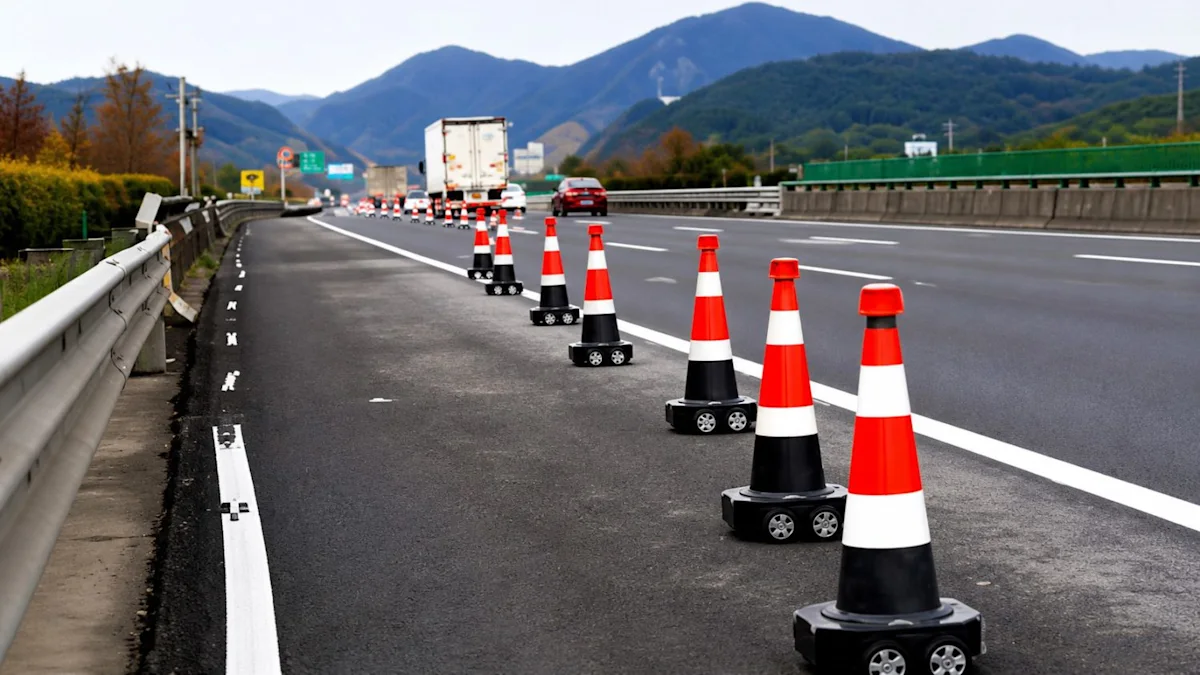
Image: X/@dominictsz - Gadget Review
Electrical Engineering & Robotics
"STMicroelectronics Weighs Developing More Powerful MCUs, MPUs for Humanoid Robots"
Summary: Every humanoid robot runs on hundreds of small computer chips, and STMicroelectronics, one of the world's big chipmakers, is deciding whether to build more powerful ones made just for robots. Allan Lagasca, who leads the company's robotics strategy, explains that robots react faster when small chips next to each sensor and motor make quick decisions on the spot, instead of sending everything to one central computer and waiting for an answer. In a demo robotic hand, six motors moved the fingers while a single microcontroller ran an AI model that tracked 21 points on a person's hand to recognize gestures. The company says it could supply around 600 parts in a single humanoid, and combining several parts into one package helps all that electronics fit on a board just 6 centimeters square. For now, the company is waiting to see how many robots get built, as carmakers like Hyundai plan to bring humanoid robots into a Georgia factory in 2028.
Article Link: https://www.eetimes.com/stmicroelectronics-weighs-developing-more-powerful-mcus-mpus-for-humanoid-robots/
Classroom Connection:
I Want to Hold Your Hand: Build a Robotic Hand (NASA, Grades K-8): https://www.nasa.gov/stem-content/i-want-to-hold-your-hand/
Train a Pose Model with Teachable Machine (Google, Grades 6-12): https://teachablemachine.withgoogle.com/
Microbit Rover with Light and Distance Sensors (MIT Edgerton Center K-12 Maker Lab, Grades 9-12): https://k12maker.mit.edu/project/microbit-robot-car
Engineering & Transportation
"China Is Testing Robotic Traffic Cones That Drive Themselves Into Position"
Summary: Setting out cones at a highway crash is dangerous work, because road crews have to step into live traffic to do it. Chinese companies including Zhongwei Electronics and Hefei Boteng Nengtong are developing wheeled cones that roll off a response vehicle and line themselves up into a barrier, so no one has to leave the truck. Operators control the cones remotely over 4G or 5G networks, and the units include motorized bases, flashing warning lights, solar charging, and docking stations for bad weather or long jobs. Gadget Review reports that the cones are being tried near tunnels, bridges, highway barriers, and maintenance zones. It also notes that no independently verified specifications for their speed, sensors, or weather performance have been published yet.
Article Link: https://tech.yahoo.com/general/articles/china-testing-robotic-traffic-cones-144649365.html
Classroom Connection:
Move the traffic cone for the TI-84 Plus CE Python: https://resources.tistemprojects.com/tistemprojects-home?resource_id=2317&cHash=2367a9488928da9673c1fa714297f40f
STEM Lessons from the US Federal Highway Administration: https://highways.dot.gov/safety/pedestrian-bicyclist/step/step-stem-lessons
Transportation Module: A Street for Everyone and Counting Cars (ASCE, Grades 6-12): https://www.asce.org/-/media/asce-images-and-files/career-and-growth/pre-college-outreach/asce-transportation-resources-module.pdf
Discover Engineering, Surveying & Safety with Palmer Engineering: https://www.palmernet.com/discover
Physics & Ocean Engineering
"Water rescue drone could help save swimmers at the Jersey Shore"
Summary: Firefighters in Harvey Cedars, New Jersey, are training with the Dolphin 3, a remote-controlled rescue device that powers itself through the waves. It can reach a struggling swimmer at up to 15 miles per hour from about half a mile away, then keep them afloat or tow them back to shore. It supports up to 1,000 pounds, so it can help several people at once. The timing matters: as summer ends, lifeguards head back to school, and local firefighters take over water rescues after Labor Day. The fire company spent about $10,000 on the robot, and the chief says the chance to save a life makes it worth it.
Article Link: https://www.nbcphiladelphia.com/news/local/rescue-robot-dolphin-3-lifeguards-new-jersey-shore/4451990/
Classroom Connection:
Explore Buoyancy with Foil Boats (CuriOdyssey, Grades K-5): https://curiodyssey.org/activities/science-experiments-for-kids/explore-buoyancy-with-foil-boats/
The Pull of a Rip: Rip Current Demonstration (RNLI, Grades 6-8): https://rnli.org/youth-education/education-resources/lower-secondary/the-pull-of-a-rip
ROVe Pack: Build a Simple ROV (Wisconsin Sea Grant, Grades 6-8): https://seagrant.wisc.edu/for-educators/rove-pack-a-grab-and-go-teaching-tool/
Thanks for reading and see you next week! If you found this newsletter insightful, please share with a fellow educator.
Need support with STEM education? I’ve got you covered:
I’m studying STEM ecosystems across the U.S., sharing best practices and ideas to bring back to your community. Grab my FREE STEM Ecosystem Insights Report here: https://www.aspenholland.com/ecosystem-report
Want to activate your brand through STEM? Let’s work together to design a hands-on experience that connects your brand with students and communities. Book your call here: https://www.aspenholland.com/consultation